Showing posts with label Pasta. Show all posts

Monday, 29 July 2019

婆婆's "Spaghetti Bolognese"

When I was a child, we pretty much had Chinese food all the time, apart from school lunches. This was due to my 婆婆 (my mum's mum) living with us, who did the cooking in the house. So we would always have a hot meal for lunch and dinner, rice with a selection of dishes. There would always be vegetables and often steamed fish, which I hated and thought of as bony and slimy. I remember her sitting in our lounge with a chopping board at her feet and a cleaver in each hand, mincing meat as we chatted or watched TV. There would also always be leftovers from the previous meal. As children, one of our favourites was when 婆婆 would fry slices of pork luncheon meat (午餐肉), and also open a can of pineapple chunks - that salty and sweet combination with the rice was always a winner.

We used to get incredibly excited when we had non-Chinese food, as it was a rare occasion. The 婆婆 referred to in the title of this post is actually my mum, so my children's 婆婆. I remember when she used to make us "spaghetti bolognese", as a special treat. It doesn't have much in common at all with a bolognese sauce as we might know it, but it is sweet and comforting. Tonight I recreated it for my family and it brought back a real feeling of nostalgia. I have adapted it a little, mainly because I had four tomatoes to use up. My children cleared their plates and the middle child asked if I could make it more "authentically" next time, using just tomato ketchup and no fresh tomatoes! I'll definitely do this, next time I make it - just follow the recipe, omit the tomatoes and add more ketchup and water if needed.

Ingredients


  • 4 large, ripe tomatoes
  • 250-300ml tomato ketchup
  • 350g pork mince
  • 1 medium onion, diced
  • 1 bowl of frozen petits pois
  • 2 shakes of worcester sauce
  • 2 shakes of light soy sauce
  • 2 cloves of garlic, peeled and bashed with the flat of a cleaver
  • 2 slices of raw ginger, peeled and bashed with the flat of a cleaver
  • A pinch of ground white pepper
  • 1 tsp sugar (optional)
  • 2 tbsp sunflower oil for frying
  • A dash of sesame oil
  • Water to thin sauce if necessary
  • Salt to taste (optional)
  • 300-350g dried spaghetti
Serves 5 - 7

Instructions

  • Cut a cross into the bottom of each tomato and cover with boiling water. Leave for 10 minutes, then drain and cool. Peel the tomatoes, then de-seed and dice finely.
  • Heat 2 tbsp of oil in a wok, then add the garlic and ginger. Stir-fry quickly, taking care not to burn
  • Add the diced onion, increase the heat and stir-fry for a few minutes, until the onion has softened. Add the minced pork and brown it until it is all sealed
  • Add the worcester sauce, soy sauce and white pepper and mix it in thoroughly. Add the diced tomato and stir-fry for a few minutes. You can remove the garlic and ginger after this stage if you like
  • Add the tomato sauce to the wok and mix thoroughly. Add a little water to thin the mixture if necessary. Bring to the boil, then cover and simmer for 35-45 minutes, or until the onion has softened. Add sugar if you wish the sauce to be sweeter. 
  • Bring a large pan of salted water to the boil and cook the spaghetti according to the packet instructions
  • When the spaghetti has 5 minutes to go, add the petits pois to the wok of sauce. Stir the sauce and simmer it for the remaining 5 minutes
  • Drain the spaghetti when it is cooked, then add it to the wok. Reduce the heat to very low, then add a little sesame oil. Mix the pasta and the sauce thoroughly in the wok. Add salt to taste if you like, at this stage
  • Serve in warmed dishes
婆婆's "Spaghetti Bolognese"


Wednesday, 24 August 2016

Basic Macaroni Cheese

This macaroni cheese has been requested twice in the past week. It is a very basic recipe, and there are many things that could liven it up, for example:
  1. Addition of crispy bacon or soft buttery leeks to the pasta mixture
  2. Use of other cheeses in your sauce
  3. Sprinkling breadcrumbs over the top of the macaroni cheese and baking till crisp
  4. A scrape of fresh nutmeg to the cheese sauce
  5. Infusing your milk by heating gently with chopped carrot, onion, celery, black peppercorns and bay leaf, then letting it cool for 30 minutes before straining
It's a current favourite of my children and their friends, and I keep it fairly simple, but tasty. I find that the vital piece of equipment for making the sauce smooth and glossy is a silicone balloon whisk. It gets right into the edges of the saucepan without scraping any of the surface off it! It can feel a bit daunting when making the roux for the first time, especially as you add the first amounts of milk. Make sure you give the flour enough time to cook in the butter and don't panic when the whole lot thickens as you begin to add the milk! Just keep whisking and it should loosen up again.

I love Colman's mustard powder on roasties and in a white sauce. You would think it would get up your nose like the English mustard paste, but used in sparing quantities, it lends a subtle interest to the sauce.

Ingredients
  • 500g dried macaroni
  • 1 pint of milk
  • 70g of butter
  • 4 heaped tbsp plain flour
  • 1 level teaspoon of Colman's mustard powder
  • A pinch of ground white pepper
  • A big handful (approx. 80g) of grated cheddar cheese, plus extra to sprinkle on top
Serves 5 - 6

Instructions
  • Pre-heat the oven to 180 degrees fan. Bring a large pan of salted water to the boil
  • In a separate pan, melt the butter over a gentle/medium heat. When it has melted, add the flour and whisk until completely combined (it's ok if the butter bubbles, but don't let it burn). Continue to whisk for a minute or two to let the starch cook

  • Add the milk a little at a time, continuing to whisk continuously. the mixture will thicken and solidify. Continue to whisk, only adding more milk when the previous amount has completely absorbed into the roux. If you add too much milk at this stage, the sauce will become lumpy

  • Eventually the sauce will loosen and become easier to handle. You can increase the heat a little at this stage, but be careful not to let the sauce boil.


  • Add the macaroni to the pan of boiling water and stir, to stop it from sticking. Cook the macaroni for half of the time indicated on the packet e.g. if cooking time is 12 minutes, cook the macaroni for 6 minutes (at this stage you will be working with two pans - stirring the pasta and adding/whisking the sauce)
If the sauce is too thick, continue to add milk until you reach the desired consistency.
If the sauce is too thin, combine a teaspoon of plain flour with a small quantity (say 25ml) of milk and add to the sauce, repeating until you reach the desired consistency. You will need to increase the heat to almost boiling point to activate the additional starch.


  • When all of the milk has been added to the sauce, add the grated cheese and whisk until fully melted into the sauce
  • Drain the macaroni and place in a baking tray. Pour over the sauce, ensuring all of the macaroni is covered and bake in the oven for 20 minutes

  • Remove the tray from the oven and add grated cheese on top. Return to the oven for a further 15 minutes

  • Remove the finished bake. Serve in warmed dishes with a simply-cooked green vegetable such as broccoli, green beans or spinach

Basic Macaroni Cheese


Monday, 22 August 2016

Linguine with Beef Rib in Red Wine Sauce

It's been 10 months since I last posted! During that time, I have completed my teaching induction year, gained a whole load of experience, not seen my family as much as I should have and reverted to same old, same old, boring meals. Mother's guilt - doing it all and feeling not particularly good at any of it. Still, my students have made progress, my family still love me and we've had a wonderful, chilled-out summer break.

Today I defrosted a pack of beef ribs which had been lurking in the freezer for a few months. In 2002 my then boyfriend booked a trip to Tuscany as a Valentine's gift. All of my friends were convinced he would propose (he didn't, even when we were on a bridge in Florence!). What sticks in my mind is the meal that our hosts cooked for us on the first night - pappardelle with hare. The sauce had been cooked in red wine for several hours and was just sublime.

I would have liked pappardelle with this dish, but one look at the queues into the shopping centre were enough to convince me that linguine would be fine. The beef rib is cooked in a slow-cooker and falls apart in a meltingly delicious way. I was worried that the chilli kick would be too much for the children, but on tasting the sauce they opted for it over yesterday's rather failed sweet and sour chicken. Even though the notoriously fussy little one had declared it his "favourite dish ever".

The beef is cooked in a slow-cooker but would be fine in a covered pan in an oven at around 120 degrees. If you aren't fond of heat, leave the chilli out.

Ingredients

  • 2 beef ribs, approx. 500g
  • 1 carrot
  • 3 shallots
  • 1-2 sticks of celery
  • 80ml red wine
  • 1 tbsp tomato puree
  • 1 tsp dried mixed herbs
  • 2 cloves of garlic, peeled and finely chopped
  • 1 red chilli
  • Ground black pepper to season
  • Vegetable oil for frying
  • Drizzle of extra virgin olive oil
  • 350-400g linguine pasta (or use tagliatelle or pappardelle)
Serves 3-4

Method
  • Dry the beef ribs on kitchen towels and season with black pepper
  • Peel the shallots, cut into half and then slice into semi-circles
  • Peel the carrot and dice finely and dice the celery. Using a sharp knife, perforate the skin of the chilli once or twice so that it doesn't inflate and explode during cooking
  • In a bowl, mix the red wine, tomato puree and dried mixed herbs
  • Heat 1 tbsp vegetable oil in a pan until very hot. Add the beef ribs, browning well on all sides. Remove from the pan and place into the slow cooker
  • Add the wine/puree/herb mixture and the chilli to the slow cooker and cook on low for 4 1/2 hours
Browned ribs with wine mixture in the slow cooker

  • Heat the beef fat left in the pan gently and add the garlic. Bubble the garlic in the pan for a minute, taking care not to let it catch and burn
  • Add the shallots to the pan, increase the heat to medium and stir for 1 minute to coat and soften
  • Add the celery and carrots to the pan and stir for 2 minutes
  • Add the vegetable mixture to the slow-cooker, cover and continue to heat on slow for a further 1 1/2 hours
Adding the vegetables to the slow cooker

  • When the sauce is ready, remove the chilli and the ribs. Discard the chilli and the bones and shred the meat with a fork, removing any tough or sinewy bits
  • Return the meat to the slow-cooker and mix well
The finished sauce - just add the pasta and a bit of extra virgin olive oil!

  • Cook 75-100g per person of linguine, according to pack instructions. When al dente, drain the pasta in a colander. Return to the pan, add the sauce and 1 tsp of extra virgin olive oil and mix well
  • Serve immediately on warmed plates


Linguine with Beef Rib in Red Wine Sauce

Friday, 28 August 2015

Linguine with Fresh Tomato and Mozzarella Sauce

Using fresh rather than cooked tomatoes brings a lightness to a pasta dish, which seems appropriate in these dying days of summer. The freshness of the tomatoes and torn basil, accompanied by some serious olive oil and generosity of seasoning, makes this a tasty lunch or light supper.

Ingredients

  • 5-6 ripe tomatoes
  • 1/2 a clove of garlic, peeled and crushed
  • Good quality extra virgin olive oil
  • Salt and freshly ground black pepper
  • Handful of fresh basil leaves, torn
  • 100g Mozzarella cheese, cut into 1cm cubes
  • (Optional) 100g bacon lardons
  • 300g dried linguine
Serves 3 - 4

Instructions

  • Peel the tomatoes by scoring a cross in the bottom of each tomato, then covering with boiling water. After 5 minutes, drain the water and replace with cold water. Peel the tomatoes, remove the seeds and chop finely (try to avoid too much liquid in the mixture by scraping out the seeds as much as you can). Place the chopped tomatoes into a bowl
  • Add 2 - 3 good slugs of good quality extra virgin olive oil to the tomatoes, then add the garlic and season well with salt and pepper. Stir to combine, then leave the flavours to mix for at least 30 minutes
  • Cook 300g of dried linguine in well-salted, boiling water according to the instructions on the packet.
  • (Optional) In the meantime, add a tablespoon of oil to a frying pan, heat until moderately hot and fry the bacon lardons until crispy and golden, then drain on kitchen paper and keep warm in a low oven
  • Drain the linguine when cooked and set to one side. Add the tomato mixture to the warm pan and heat through gently for 2-3 minutes. Add the linguine to the pan and mix well to combine
  • Transfer the linguine in warmed dishes. Top each dish with cubes of mozzarella, bacon lardons (optional) and torn basil leaves. Serve immediately

Linguine with Fresh Tomato and Mozzarella Sauce

(including crispy bacon lardons)


Monday, 9 February 2015

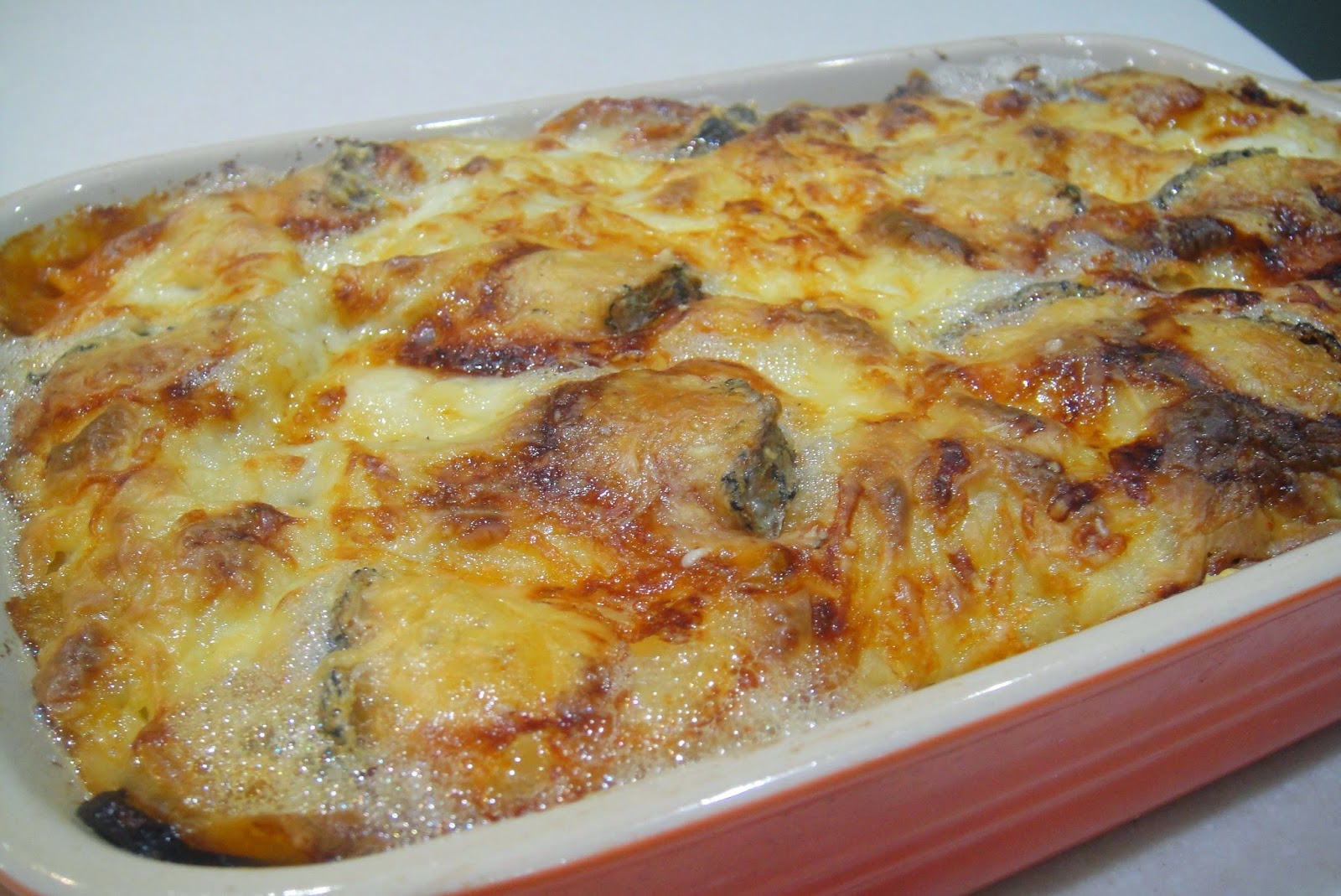
Butternut Squash, Spinach and Mushroom Lasagne

To be honest, I don't know why I cooked this (apart from the fact that it's delicious). It is a faff and a half, and if I tried putting spinach and mushrooms (and in the middle child's case, white sauce) in front of the children, there would be an outcry of "eeeeeewwwww! Vom!"..... which would inevitably end in someone being sent to their room and a big old strop from me. You see, I mind much less if they don't like something that has taken about 5 minutes to put together, but when it has taken an arsenal of kitchen equipment and hours to prep all of the separate components then.... well....

For this reason, I've made the lasagne in two separate, smaller dishes, one of which I've given to a friend. It's a really tasty vegetarian lasagne, a little bit sophisticated and would be a good dish for entertaining. Personally, I preferred it without the goat's cheese, but my husband disagreed. To be honest, I'd rather just grate some cheddar over the top!

I've added a very small amount of dried, crushed chillies when roasting the butternut squash, which works well with the sweetness of the squash and the earthy flavours of the spinach and mushroom.


Ingredients

  • 1 butternut squash
  • 1x 250g box of chestnut mushrooms (or use oyster/shiitake if you are feeling indulgent)
  • 1 x 200g bag of spinach
  • Dried lasagne sheets
  • (Optional) 25g goat's cheese (I used Kidderton Ash, you might prefer something milder), or use grated cheddar
  • 30g butter
  • A pinch of grated nutmeg
  • 2 tbsp olive oil for frying mushrooms
  • 2 tsp dried mixed herbs (oregano, thyme, rosemary, marjoram and optional crushed chillies)
  • 2-3 tbsp grated parmesan cheese
  • Salt and ground black pepper to taste
For the tomato sauce:
  • 1 clove garlic, peeled and crushed
  • 2 x 400g tins chopped tomatoes in juice
  • 1 tsp dried mixed herbs (oregano, thyme, rosemary, marjoram)
  • 1/2 tsp red wine vinegar
  • 1 tbsp tomato puree
  • 1 red chilli
  • 1/2 tsp sugar
  • Ground black pepper to season
  • 1 tbsp olive oil
For the white sauce
  • 40g butter
  • 2 dessert spoons of plain flour
  • Approx. 2/3 - 3/4 pint milk
Serves 4 - 6


Instructions

(Roasting the butternut squash)
  • Pre-heat the oven to 190 degrees fan
  • Slice the butternut squash into quarters lengthways. Place skin-side down on a baking tray, then sprinkle salt, ground pepper and dried mixed herbs over the top. Drizzle with olive oil, then place in the oven and cook for 35 minutes until the squash is softened and browned. Remove from the heat and let cool
Yummy roasted butternut squash

(Making the tomato sauce)
  • Meanwhile, make the tomato sauce. Heat the olive oil very gently in a heavy-based pan, and add the crushed garlic. Let it bubble very gently for a minute or two to infuse the oil - do not let it catch and burn, as this will make the sauce bitter
  • Add the tinned tomatoes, tomato puree, dried mixed herbs, red wine and sugar. Using a sharp knife, pierce the chilli a couple of times so that it doesn't explode. Add the chilli to the pot and give several turns of the pepper mill. Mix well to combine
  • Heat the tomato sauce until it is bubbling, then reduce the heat, put a lid on the pan and simmer for 45 minutes until all of the flavours have infused. When the sauce has cooled down, remove the chilli and discard
(Preparing the spinach and the mushrooms)
  • Rinse the spinach and drain. Heat 30g butter in a heavy-based pan until bubbling. Add the spinach to the pan, then grate over some black pepper and add some salt. Add a pinch of freshly grated nutmeg, then stir rapidly until the leaves are just wilted. Remove from the heat
  • Slice the mushrooms finely. Add 2 tbsp. olive oil to a heavy-based pan and heat the oil until it begins to move. Add the mushrooms and a good pinch of black pepper, than stir-rapidly until the mushrooms are coated in oil and slightly browned. Remove from the heat


(Assembling the lasagne)
  • When the butternut squash is cool enough to touch, take a quarter and place it skin-side down onto a chopping board. With a sharp knife, remove the skin from the narrow end, and peel as much as you can away. Don't worry if you can't peel much.
  • With the skin-side on the board, slice the butternut squash into slices 3-4mm thick. Peel the skin away gently with the knife as you cut towards the board.
  • Place a few spoonfuls of the tomato sauce into the base of a baking dish, so that the base is just covered. Arrange slices of butternut squash across the bottom of the dish, then scatter over some sliced mushrooms and spinach. Top with a layer of dried lasagne sheets, then repeat, layering the lasagne as you go. Finish with a layer of lasagne sheets, then spread any remaining tomato sauce over the top


(Making the white sauce)
  • Gently melt 40g butter in a heavy-based pan until it starts to bubble. Add 2 heaped dessert spoons of plain flour, and whisk into the butter. Keep whisking for a minute or two, to allow the flour to cook
  • Add the milk a splash at a time to the pan, whilst whisking continuously. Don't worry that the roux goes solid.... it will loosen eventually! Keep adding the milk and whisking, until the sauce resembles custard in its consistency. I find that a silicone whisk works well at getting rid of any lumps. Add salt and pepper if desired
(Baking the lasagne)
  • Using a ladle, spread the white sauce evenly over the lasagne, until the sheets are completely covered. Dot the top of the lasagne with cubed goat's cheese or grated cheddar and finish with a light dusting of grated parmesan

  • Bake in the oven at 195 degrees for 35 minutes, or until the lasagne is piping hot throughout. Remove from the oven and serve immediately. Would be nice with a peppery green salad to cut through the richness


Butternut Squash, Spinach and Mushroom Lasagne


Friday, 26 September 2014

Bucatini with Beef Meatballs

My middle child doesn't have friends over to play often, due to crazy logistics this year for the children, and us parents. Sometimes it feels as if we are ruled by the schedule of (particularly my eldest's) various extra-curricular activities, but a few friends have assured me that this happens in their households too. This year, we are starting him on some of the same classes as his sister, and next year I hope that everything will become easier when they are (hopefully) all at the same school.

This is the last week that I will be home relatively early (early enough to do school pick-up), so we have taken a few days to have his friends around to play. On Tuesday I did egg-fried rice, which didn't go down too well (and I hate sending a child home without being sure that they are full), so I found out in advance what today's guest likes eating. It turns out he loves meatballs, so I procrastinated until 10pm last night, then got on with it.

Whilst the sauce was cooking, I found out that our guest wasn't a fan of vegetables ("I don't eat them"). But he did say he ate pasta sauce, so once the sauce was cooked, I took a stick blender to it and pureed it all. The smooth texture of the sauce worked well with the meatballs, so I'll probably continue to puree in the future.

I normally prefer to use a combination of pork and beef for meatballs, but didn't remember to defrost any pork. These meatballs are easy to make and cook, and freeze well for a standby dinner.

Middle child, despite cleaning his plate (save one meatball, which was snaffled by his sister), protested that the meatballs were not as nice as the ones served in the school canteen!


Ingredients


Meatballs
  • 400g beef mince (I used 10% fat Aberdeen Angus mince)
  • 4 tbsp. stale breadcrumbs (I used wholemeal bread, which I had previously whizzed in a processer and put in the freezer)
  • 2 tsp chopped mixed herbs (rosemary, thyme, oregano, marjoram) or 1 tsp dried mixed herbs
  • 1 clove garlic, peeled and crushed
  • 1 tbsp grated parmesan cheese
  • 1 egg
  • 5-6 twists of freshly ground black pepper
Makes approx. 35 meatballs

Sauce
  • 1 onion, finely diced
  • 1 large carrot, finely diced
  • 1 stick of celery, finely diced
  • 1-2 cloves of garlic, peeled and finely chopped
  • 2 x 400g tins of peeled plum tomatoes
  • 1 tbsp tomato puree
  • 2 tsp dried mixed herbs
  • 1 tsp balsamic vinegar
  • 50g cubed pancetta (or use sliced streaky bacon)
  • 1 red chilli
  • Ground black pepper to season
  • Olive oil and/or sunflower oil for frying
  • (Optional) Extra virgin olive oil for drizzling
  • (Optional) Grated cheese

Instructions


(Meatballs)
  • Place the mince, breadcrumbs, chopped herbs, garlic, egg, parmesan cheese and pepper into a large bowl. Using your hands, squidge everything together until the mixture is thoroughly combined
  • Line a plate or tupperware box with greaseproof paper. Take a small amount of the mince mixture in your hands and roll it to make a meatball, around 2.5 - 3cm diameter. Make sure that the mixture holds firm and place on the plate/box. Repeat, placing the meatballs a small distance apart from each other. I use a box, and interleave the meatballs with greaseproof paper
  • Cover the plate/box with clingfilm or a lid, and place in the fridge overnight

Beef meatballs, ready for the Fridge


(Dish)
  • Heat a heavy-based pan and add 2 tbsp. olive oil. Heat until the oil is moderately hot and add the pancetta. Brown the pancetta, then add the onions and garlic and stir for 3-4 minutes until the onions are glossy and softened (don't let the garlic catch and burn)
  • Add the diced carrot to the pan and stir for a further 4-5 minutes
  • Add the plum tomatoes, rinsing out each tin with approx. 1/4 tin of water and adding to the pan
  • Add the tomato puree, celery, dried mixed herbs and balsamic vinegar and stir well to combine
  • Using a knife, pierce the chilli a couple of times, then add to the sauce
  • Bring the sauce to the boil, then cover and lower the heat to a simmer
  • Simmer the sauce for45 minutes, until the vegetables are soft
  • Remove the chilli, then puree the sauce until smooth with a stick blender, and add some more water if it seems too thick. Continue to simmer on a low heat, covered, whilst you cook the meatballs and pasta
  • Heat 2 tbsp. olive or sunflower oil in a frying pan and add the meatballs (approx. 6 per child or 8 per adult). Brown the meatballs until they have a lovely rich colour

Brown the meatballs until they have a lovely rich colour

  • Add the meatballs to the sauce, replace the lid and simmer for 15-20 minutes
  • In the meantime, boil a large pan of salted water. Add a splash of oil, and add 100g per adult of pasta to the pan (I used bucatini, but any long pasta would be fine)
  • Boil the pasta according to the instructions on the pack. When the pasta is ready, drain and place into warmed plates
  • Add the meatballs to the pasta using a slotted spoon, then add generous amounts of the sauce to the dish
  • (Optional) Drizzle with extra virgin olive oil and add grated cheese (I used cheddar) and more ground black pepper if required
  • Serve with a big glass of red wine

Bucatini with beef meatballs

Sunday, 21 July 2013

Penne with Fresh Tomato and Mascarpone Sauce

The middle child has been strange about creamy, buttery sauces for a while. I guess he takes after me, who would heave at the sight of a croissant when I was young. How times have changed!

This is one of those "Tuesday after swimming" dishes - the tomato sauce can be prepared the night before, then reheated and the mascarpone stirred in just before serving. I was a bit worried about the creaminess, but it turned out that my sociable little children were invited back to a friend's house for pizza, so I ended up eating this dish myself, and it was really very tasty and easy. It used up the remnants of a tub of mascarpone from a disastrous cheesecake, but good old Philadelphia or any full fat cream cheese would do as a substitute.


Ingredients

  • 4-5 large, ripe tomatoes (they must be ripe!)
  • 1 tbsp tomato puree
  • 1 clove of garlic, crushed
  • 1 heaped tbsp mascarpone cheese
  • 3-4 springs of fresh basil, leaves removed and finely chopped
  • Olive oil for frying
  • A touch of salt and ground black pepper
  • 150-200g penne pasta
Serves 2


Instructions

  • Using a knife, score a large cross into the bottom of each tomato. Place in a large bowl and cover with boiling water. Leave for 10 minutes
  • Remove the tomatoes and peel the skin off. Roughly chop and de-seed the tomatoes, and put aside
  • Heat 1 tbsp olive oil in a heavy bottomed pan to a moderate heat. Add the crushed garlic so that it is just trembling bubbles in the oil, and stir for 1 minute to flavour the oil
  • Add the chopped tomatoes, tomato puree, chopped basil, salt and black pepper, and stir well to combine. Bring back to bubbling, then lower the heat to a simmer, cover the pan and leave to cook for 20 minutes. Add small quantities (20ml increments) of water to the pan if you feel that the sauce is getting too thick
  • When the tomatoes have softened after 20 minutes, mash them to break them up. Continue to heat for another 10 minutes
  • Cook the penne according to the instructions on the packet, and drain when cooked to al dente
  • Add the mascarpone to the sauce and stir to combine. Add the penne to the sauce and mix well
  • Serve immediately in warmed bowls, garnished with fresh basil

Penne with Fresh Tomato and Mascarpone Sauce

Thursday, 4 July 2013

Tomato, Mozzarella and Aubergine Pasta Bake

Pasta bakes are for those afternoons when there are swimming lessons after school, everyone gets home late and tired, and dinner needs to be on the table pretty quickly. The oven has an automatic timer, so it's just a case of popping the bake into the oven, setting the duration and end time, and being greeted by the gorgeous smell of melting cheese as you walk through the door. No photo unfortunately, as this was one I prepared the evening before and left in the fridge for our nanny to put on the next day.


Ingredients

  • 200g dried casarecce pasta (penne, fusilli or other such pasta shapes are a good alternative)
  • 125g mozzarella cheese, cut into small cubes
  • 200g aubergine, cut into 1.5cm cubes
  • 2 dessert spoons of pancetta cubes or sliced streaky bacon
  • 400g Jamie Oliver's simple tomato sauce - see recipe here - or use a ready made tomato pasta sauce
  • 2 cloves of garlic, crushed
  • A handful of grated parmesan
  • Olive oil for frying
  • Ground black pepper
Serves 3-4


Instructions

  • Cook the casarecce pasta in a large pan of salted, boiling water. Remove from the heat and drain when the pasta is 3-4 minutes short of the cooking time on the instructions
  • Heat a couple of teaspoons of olive oil in a heavy based pan. When the oil is hot, add the pancetta cubes and fry until browned 
  • Add the aubergine cubes to the pan and fry on a moderate heat for 5 minutes, until the aubergine begins to colour and shrink. Add the crushed garlic and fry gently for 1 minute
  • Add the tomato sauce to the pan and heat until simmering gently. Add the drained pasta, season with ground black pepper to taste, and stir to combine the ingredients throroughly
  • Place the pasta mixture into a baking dish and dot the cubes of mozzarella evenly around the top of the pasta
  • Sprinkle over the parmesan cheese and place in the oven at 185 degrees for 30 minutes
  • Serve with a simple green salad

Sunday, 16 June 2013

Lasagne

I don't make a lot of lasagne, as I find it a bit of a faff. However, we'd been eating spaghetti bolognaise for a few days, and we still hadn't finished that massive tub I'd taken out of the freezer. I made up the leftovers into a lasagne on Sunday night, for the children to have for their dinner on Monday. Then, shame of shame, instead of leaving it assembled in the fridge for our nanny to cook the next day, I cooked it in advance at 1am, just so that I could get the photo for my blog! Luckily, it wasn't too shrivelled up by the time the children got round to eating it, and they gobbled it up without complaint.

I find that the best way to get a lump-free bechamel sauce is to use a silicone whisk, which really gets into the edges of your saucepan.

To make a really lovely bechamel sauce, you could infuse your milk by heating it in a pan with some chopped onions, carrots, celery, a bay leaf and some peppercorns. Heat to just below boiling point, leave it to cool, then strain and use in your sauce. If you could be bothered, of course...


Ingredients


  • A quantity of bolognaise sauce (5-6 ladle-fuls) - you can see my recipe here
  • 40-50g of butter
  • 2-3 heaped dessert spoons of plain flour
  • Approx 3/4 to 1 pint of milk
  • Approx 6-8 dried lasagne sheets
  • A handful of grated cheese (I used cheddar)
  • (optional) Salt and ground black pepper to taste
Serves 2-3


Instructions


Bechamel Sauce
  • Melt the butter in a heavy-based pan until just beginning to bubble. Add the flour and stir to combine to a roux
  • Add the milk, a little at a time, whisking constantly. The roux will absorb the milk and get quite lumpy to start with, but keep whisking and eventually it will begin to flow
  • Once you have a glossy, thick sauce, lower the heat and stir occasionally, whilst you are building up your lasagne
Building the lasagne
  • Take a lasagne dish and start with a thin layer of bolognaise sauce in the bottom. Dribble a layer of bechamel sauce over, and top with a layer of dried lasagne sheets
  • Repeat with the bolognaise, bechamel and lasagne sheets until you have built the lasagne
  • Finish with a covering of bechamel sauce, the sprinkle some grated cheese over the top

Lasagne ready for the oven
  • Place in an oven at 190 degrees for 30 minutes
  • Remove from the oven and serve - a simple salad with a vinaigrette makes a nice accompaniment
Fresh out of the oven (at 1 in the morning...)

Lasagne

Wednesday, 29 May 2013

Family Spaghetti "Bolognese"

This is bolognese in a loose sense of the word - purists would probably raise an eyebrow.

In my ideal world, there would be a glass of red wine and perhaps a chopped chicken liver or five in this recipe. I tend to chop the vegetables into very small pieces, and put the mushrooms into a food processor, which works well with the children. You can really bulk out the mix with lots of vegetables, and also add red lentils if you like. This one is a firm favourite with the middle child, who loves helping me to cook it, cleans his bowl and always asks for seconds.


Ingredients

  • 2 onions, chopped finely
  • 2 large carrots, chopped finely
  • 1 stick of celery, chopped finely
  • 4 cloves of garlic, chopped finely
  • 2 heaped dessert spoons of pancetta cubes or sliced streaky bacon
  • 500g beef mince
  • 1 X 400g tin of peeled plum tomatoes
  • 1 tablespoon worcester sauce
  • 2 tablespoons tomato puree
  • A handful of mushrooms, chopped finely (or whizzed in a food processor for the fungus-phobic)
  • 1 dessert spoon dried, mixed herbs (oregano, thyme, rosemary etc.)
  • A splash of milk
  • 1 beef stock cube, made up with 300ml boiling water
  • (Optional) 1/2 a glass of red wine
  • Sunflower oil for frying
  • Splash of extra virgin olive oil to serve
  • Ground black pepper to taste
Serves 8


Instructions

  • Heat a splash of sunflower oil in a large, heavy-bottommed pan and add the pancetta when very hot. Stir around the pan, allowing it to brown
  • Add the onions and stir until they soften and turn glossy
  • Add the garlic and cook for 30 seconds, before adding the beef. Turn the heat to high and brown the mince all over
  • Add the worcester sauce, carrots, celery, mushrooms and mixed herbs and mix well
  • Add the tinned tomatoes, beef stock (and wine) and tomato puree. Bring to the boil, mixing well
  • Add a splash of milk, which will make your sauce take on a more silky texture
  • Add plenty of ground black pepper, lower the heat, partially cover and simmer for 45 minutes to an hour. If necessary, break up the plum tomatoes at the end of the cooking time
  • Add a splash of extra virgin olive oil to serve
The sauce improves in flavour if left overnight, and can be frozen in batches. My pasta of choice would be linguine or maybe tagliatelle, but any long pasta will do. The children like grated cheddar on top of the bolognese sauce, so I usually serve a bowl at the table, and they help themselves.


Family Spaghetti "Bolognaise"

Tuesday, 14 May 2013

Pappardelle with Pesto

Fresh pesto is one of my favourite, quick comfort meals. The fresh stuff tastes nothing like the stuff on the supermarket shelf, but if you can't be bothered making it, you can now find it fresh in the fridge sections of most supermarkets. Fresh pesto will last for a couple of days in a sealed jar in the fridge, but make sure that it is covered with a layer of oil. If you don't have a food processor, you can mix the ingredients with a pestle and mortar.

When the weather gets a bit warmer, I like to buy a pot of basil and keep it on a sunny window sill, or grow it in a container outside. If you cut it lowish at the stalks, side shoots will pop up and your pot could well last you a couple of months.

Ingredients


  • Large handful of fresh basil leaves, washed and excess water shaken off
  • Half a clove of garlic
  • Heaped tablespoon of pine nuts
  • Heaped tablespoon of grated parmesan cheese
  • A tiny pinch of salt
  • Extra virgin oilve oil
  • 200g pappardelle pasta or pasta of choice
Serves 2

Instructions

  • Lightly toast your pine nuts in a medium hot pan, until they turn golden. They burn easily so keep an eye on them. Set aside and leave to cool
  • Heat a large pan of boiling, salted water and add your pappardelle. Cook according to the instructions on the packet
  • Put the basil leaves, salt, cooled pine nuts and garlic into a food processor, and blend until the mixture is finely chopped
  • Scrape the mixture back into the bottom of the processor, add the parmesan and a slug of the olive oil. Replace the lid and pulse. Add more oil until you reach your desired consistency
  • Drain the pasta, place into warmed serving bowls, add the pesto, mix and serve

Fresh Pesto Sauce

Pappardelle with Pesto

Pappardelle with Pesto